Graphic notations
ID
Zodiak
Type
Date
1968 + 2018
Since 2018, ZODIAK Warsaw Pavilion of Architecture has been popularizing knowledge about the architecture and urban space of Warsaw. The pavilion provides a venue for the project to be presented to the public in the form of an exhibition in 2027.
Warsaw is a city that has gained significant momentum in recent years and is finally defining the kind of city it wants to be: ambitious, modern and on a par with other European metropolises. Destroyed, rebuilt, modernised, and then awkwardly globalised, the city nevertheless still bears the marks of these contradictions on every street corner and in every cityscape. Among the few structures that manage to hold that tension thoughtfully is the Zodiak Warsaw Pavilion of Architecture — a building that punches well above its weight, architecturally and institutionally.
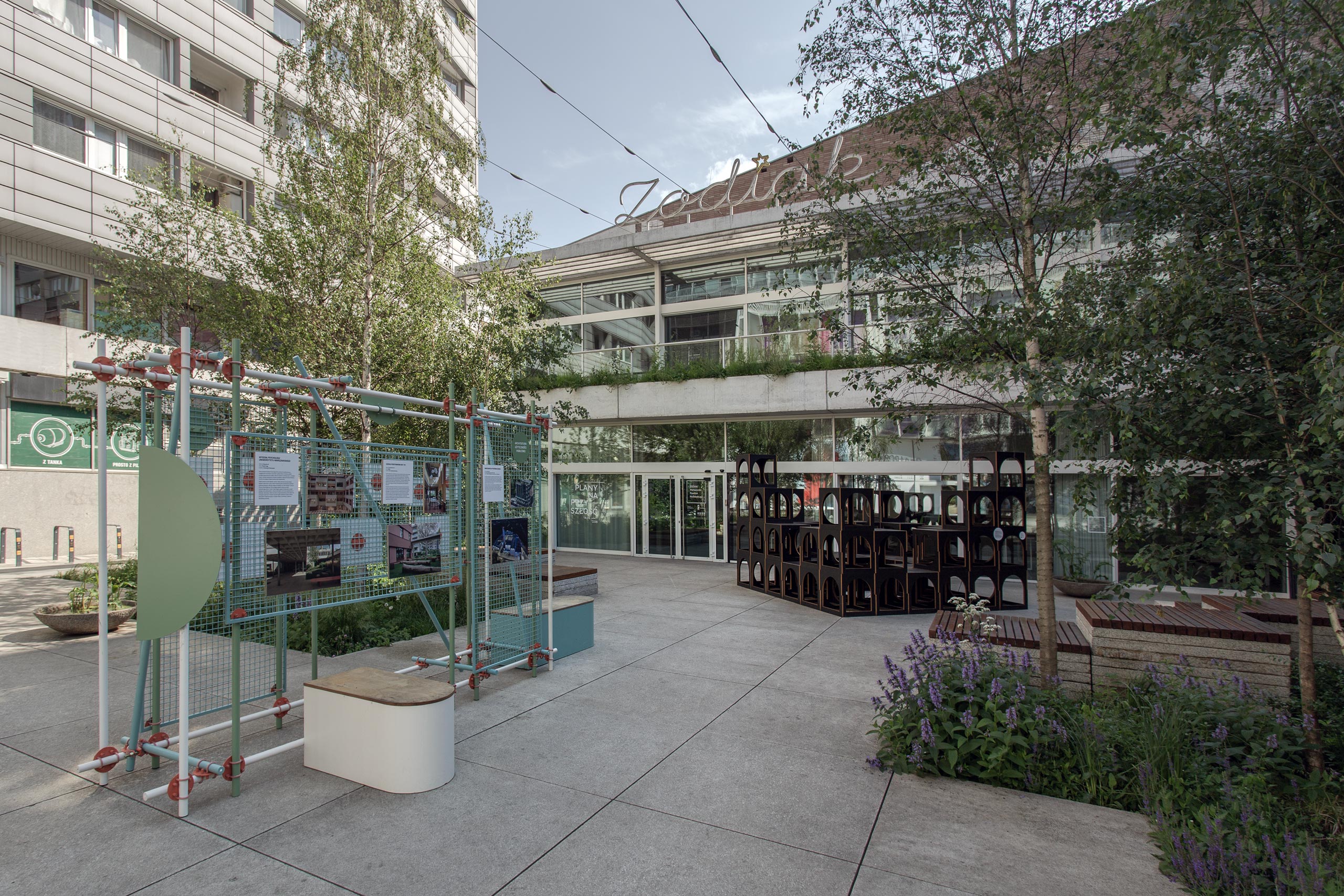
The square in front of the Pavilion, photo by the author, 2026
The original Zodiak was designed by Jan Bogusławski and Bohdan Gniewiewski and opened in 1968 as part of the “Eastern Wall” urban complex — a bold modernist corridor conceived by Zbigniew Karpiński along Warsaw’s central passage.
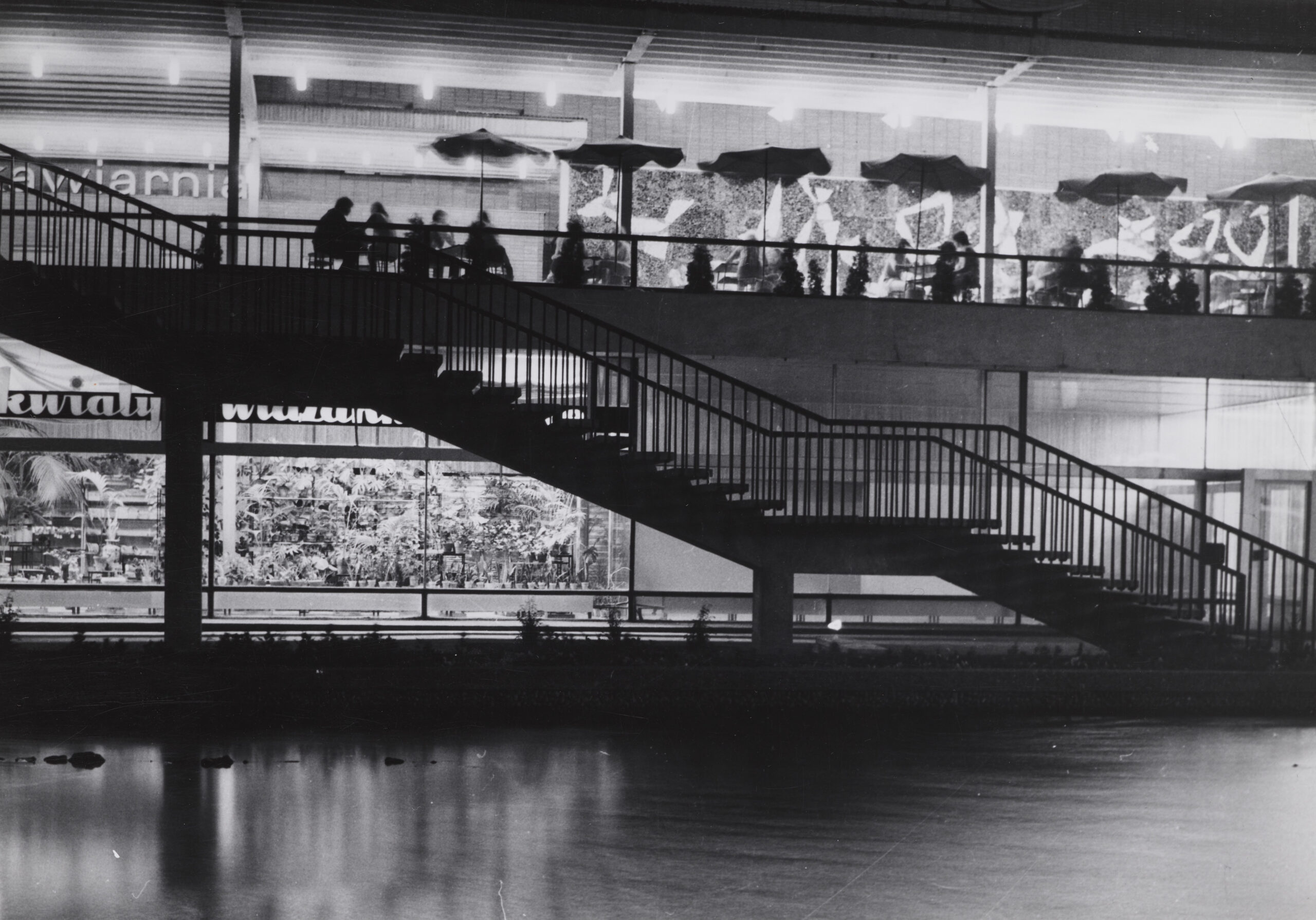
ph. Edward Hartwig, pavilion resources
The structure belonged to a moment when Warsaw, still reassembling itself after wartime obliteration, briefly embraced a confident, forward-looking modernism.
The 1990s were unkind to it. During the renovation of the main building, the well-known pergola was dismantled, the characteristic neon sign and glass mosaic by Maria Leszczyńska were removed, along with the outdoor steps and the fountain in front. What remained entered a long, undignified dormancy — a fate shared by much of Warsaw’s modernist heritage in the years of hasty post-communist transformation.
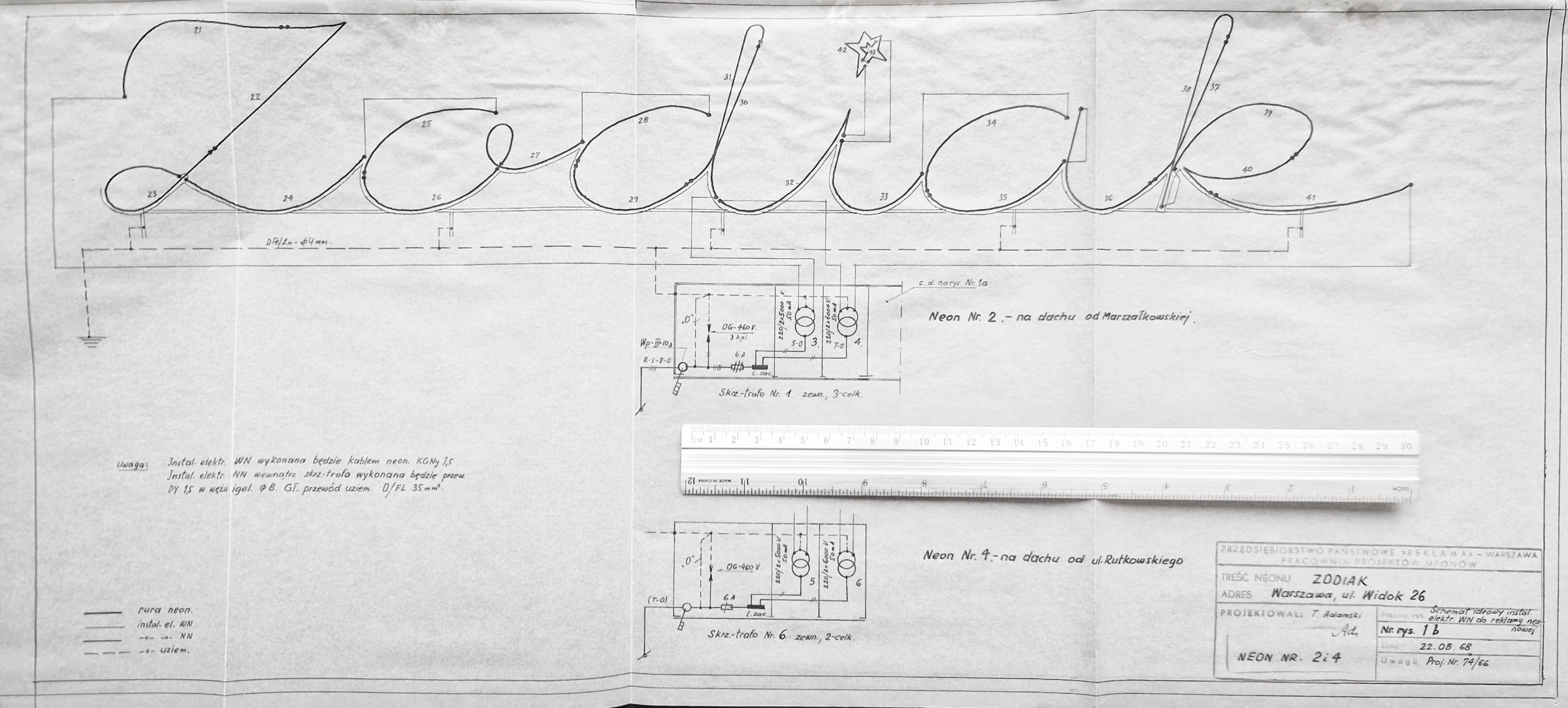
Neon sign design, pavilion resources
Since 2018, Zodiak has operated as a public institution curated by the Office of Architecture and Spatial Planning of the Capital City of Warsaw, in cooperation with the Warsaw Branch of the Association of Polish Architects. Its program — exhibitions, events, educational initiatives, and the Zodiateka reading room with some 600 publications on architecture, urban planning, and the history of Warsaw — makes it a rare thing: a civic space genuinely devoted to critical thinking about the city itself.
That ambition has been recognized internationally: Zodiak was nominated for the EUMies Award 2022 and received the Architectural Prize of the Mayor of Warsaw. For a city still struggling to reconcile its layered past with its metropolitan aspirations, this small pavilion on Pasaż Wiecha offers something rare — a place to stop, look, and think about where Warsaw has been, and where it might yet go.
EXPLORE MORE
LIBRARY